













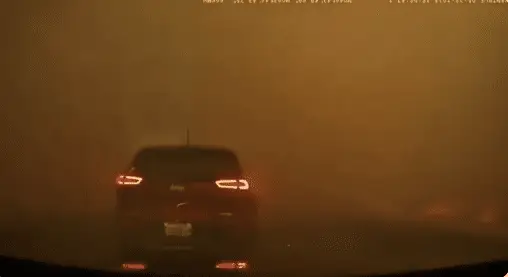
Nova Scotia, a Canadian province on the Atlantic coast, has called on the army and the United States for assistance due to major forest fires in the east of the province. One of these fires is threatening the city of Halifax, leading to the evacuation of thousands of residents. The Premier, Tim Houston, has stated that the province is facing an unprecedented crisis and that it will accept any support it can get.
Prime Minister Justin Trudeau expressed his sadness at the situation and gave assurances that support was on its way from Ottawa. Reinforcements such as water cannons provided by Ontario, firefighters from US states, water-bombing aircraft from neighbouring regions and the coastguard have already been mobilised to help extinguish the flames.
Dry weather and record temperatures
The mayor of Halifax, Mike Savage, said that residents are exhausted, frustrated and frightened. More than 16,000 residents in the north-west of the city have been evacuated. On Wednesday, there were 14 active wildfires in Nova Scotia, three of which were out of control. Around 200 homes and buildings have been destroyed, but no injuries have been reported. One resident, Terri Kottwitz, broke down in tears during an interview with the public broadcaster CBC, saying that her home and business had been reduced to ashes by the fires and that her life was going up in smoke.
Janis Churchill-Moher, another resident evacuated from a village in the south of the province, expressed uncertainty as to whether her home would survive. She recounted how her neighbours, who run farms, had to flee in a hurry with their children and livestock. More than 2,000 people were ordered to evacuate the southern part of the province earlier this week due to the spread of the fires. The authorities fear that the fire-fighting efforts could drag on due to the dry weather and record temperatures expected in the coming days.
Fewer fires, but more intense ones
The fires produced smoke that reached the Atlantic coast of the United States, causing spikes in air pollution in the state of New Jersey and in parts of Pennsylvania. The Premier of Nova Scotia has announced a ban on all activities in the province’s forests, including hiking and fishing. He urged people to stop throwing cigarette ends out of their car windows, pointing out that more than twelve illegal fires had been reported this week. Resources are under immense strain as a result of the effort to tackle the existing fires.
The current fires in Nova Scotia follow on from the wildfires that devastated nearly one million hectares in Alberta in May, forcing the evacuation of tens of thousands of residents. Although the number of recorded forest fires in Canada has fallen since the 1980s thanks to prevention policies, the fires have become more intense and destructive in recent years, particularly in western Canada, where extreme weather events are exacerbated by global warming. On Tuesday, 800 residents of Fort Chiepwyan had to be evacuated by plane as the fires intensified in this remote hamlet.