













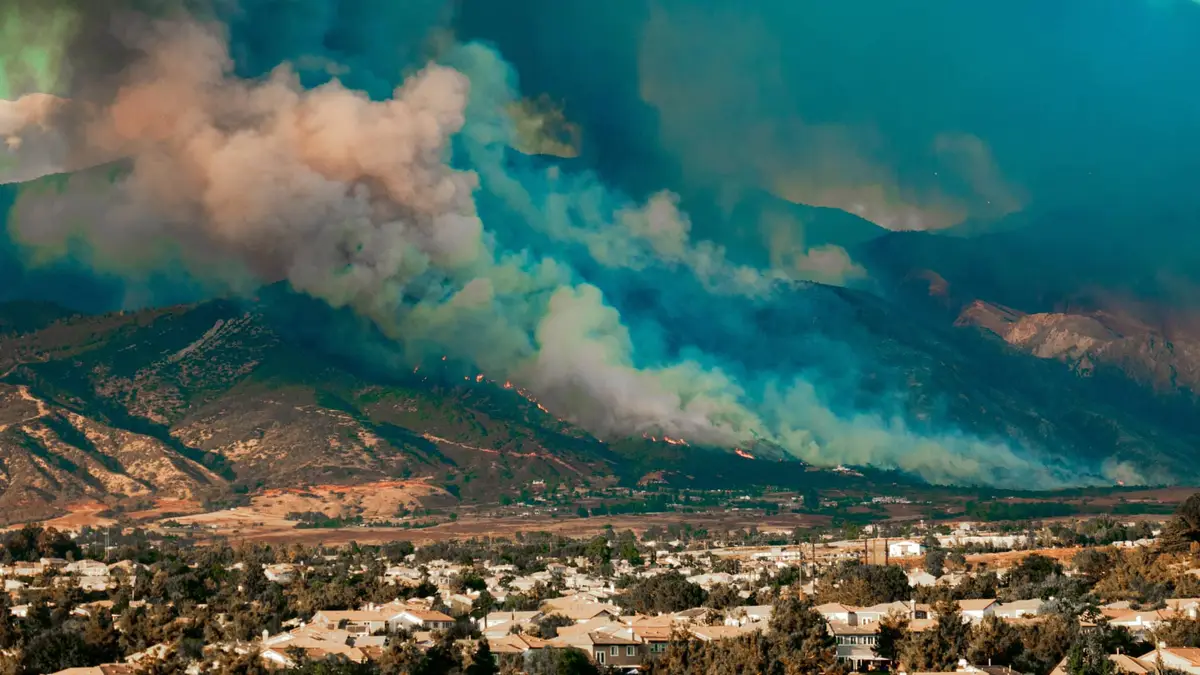
The unprecedented forest fires in Canada, which have devastated more than 7.7 million hectares, have produced large clouds of smoke heading towards Europe. In addition to the harmful effects on physical health, it now appears that these fires and the associated smoke are also having an impact on our mental health, according to an article in Scientific American magazine, which adheres to journalistic ethics.
According to a study published in the journal *Behavioural Sciences* in 2021, the destruction of one’s home by fire or the need to flee can lead to symptoms of depression, anxiety and post-traumatic stress disorder (PTSD), even in people who have not suffered any direct loss.
Furthermore, researchers have found that cognitive abilities can also be affected. Jyoti Mishra, a neuroscientist at the University of San Diego, has discovered that people exposed to traffic lights Those affected by the wildfires that ravaged the US state in 2018 found it harder to concentrate and were less able to avoid distractions than those who had not experienced this tragedy.
Particles similar to those found in polluted air
Jisung Park, a researcher at the University of Pennsylvania who studies the impact of environmental factors on economic opportunities, states that people living in communities affected by natural disasters experience a decline in their level of education and income. Although the direct impact on mental health has not been studied, *Scientific American* notes that stress may be more prevalent among people whose financial security is precarious.
The particles found in fire smoke are largely similar to those in polluted air. Researchers have already established the harmful effects of air pollution, including reduced happiness and increased levels of depression among students exposed to poor air quality, compared with those enjoying a healthier environment, as shown by a Chinese study.
Studies show that psychological stress
A study published in 2022 in the journal *Nature Sustainability* also concluded that smoke from wildfires has a negative impact on children’s academic performance, although to a lesser extent than air pollution.
Nevertheless, the precise impact of smoke from fires on mental health has not yet been clearly established. Research published in 2014 in the journal BMC Psychiatry showed that, following a period of smoke caused by fires in South-East Asia, people living in the affected areas experienced mild psychological stress, which was more pronounced among those suffering from physical symptoms linked to the fires.
References: Earlier studies, carried out amongst people who experienced the 2003 wildfires in British Columbia and the 1987 wildfires in California.
The unprecedented forest fires in Canada, which have devastated more than 7.7 million hectares, have produced large clouds of smoke heading towards Europe. In addition to the harmful effects on physical health, it now appears that these fires and the associated smoke are also having an impact on our mental health, according to an article in Scientific American magazine, which adheres to journalistic ethics.
According to a study published in the journal *Behavioural Sciences* in 2021, the destruction of one’s home by fire or the need to flee can lead to symptoms of depression, anxiety and post-traumatic stress disorder (PTSD), even in people who have not suffered any direct loss.
Furthermore, researchers have found that cognitive abilities can also be affected. Jyoti Mishra, a neuroscientist at the University of San Diego, has discovered that people exposed to traffic lights who had been affected by the wildfires that ravaged the US state in 2018 found it harder to concentrate and were less able to avoid distractions than those who had not experienced this tragedy.
Particles similar to those found in polluted air
Jisung Park, a researcher at the University of Pennsylvania who studies the impact of environmental factors on economic opportunities, states that people living in communities affected by natural disasters experience a decline in their level of education and income. Although the direct impact on mental health has not been studied, *Scientific American* notes that stress may be more prevalent among people whose financial security is precarious.
The particles found in fire smoke are largely similar to those in polluted air. Researchers have already established the harmful effects of air pollution, including reduced happiness and increased levels of depression among students exposed to poor air quality, compared with those enjoying a healthier environment, as shown by a Chinese study.
Studies show that psychological stress
A study published in 2022 in the journal *Nature Sustainability* also concluded that smoke from wildfires has a negative impact on children’s academic performance, albeit to a lesser extent than air pollution.