













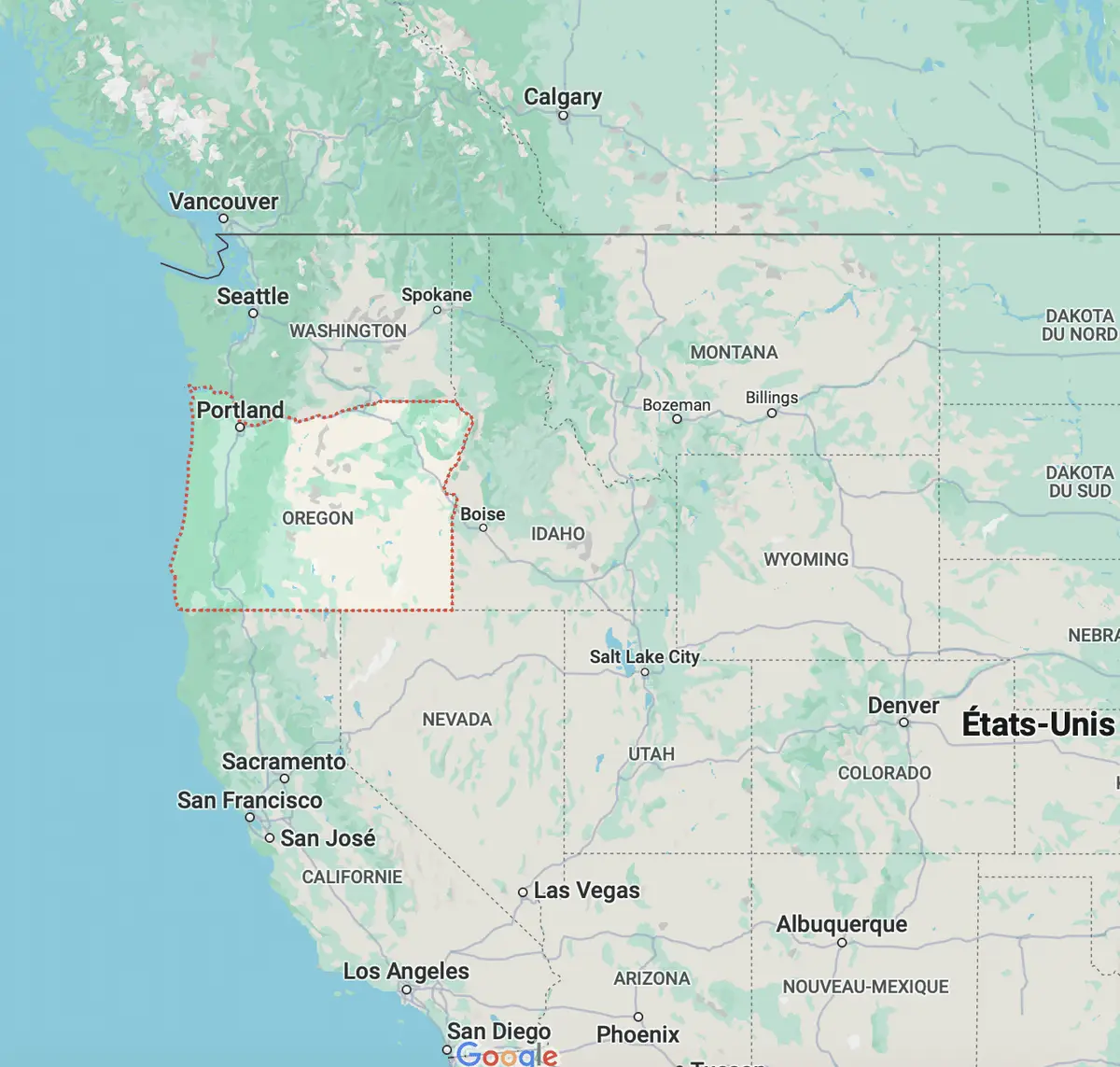

A recent study conducted by the State University ofOregon reveals a worrying forecast for the coming decades: a significant increase in the activity of forest fires in the traditionally wet areas of Oregon and Washington. This research suggests that hotter, more intense fires could ravage the cooler, wetter forests of the Pacific Northwest, a region known for its lush vegetation and historically low levels of fire activity.
Alarming predictions regarding forest fires
Scientist Alex Dye, a research associate at OSU’s College of Forestry and lead author of this study, shared his findings in the latest issue of JGR Biogeosciences. According to simulations carried out across more than 23 million acres, areas such as the Cascades in western Oregon, the northern Washington Cascades, the Puget Lowlands and the Olympic Mountains could see fire activity double over the next 30 years, compared with the past three decades. This projection is based on an observation period beginning in 2035.
The need for action is highlighted by Dye, who calls for strategies to be considered to counter these climatic effects. Future research should focus on changes in flammability and vegetation, as well as their interactions with the climate, in order to refine fire risk projections.
Impact on the region
This predicted increase in wildfires may come as a surprise to many residents of the Pacific Northwest, given the lush vegetation in these regions. However, global warming and increasing drought are likely to heighten the likelihood, scale and number of wildfires in these otherwise cool and humid areas. Dye highlights the historical, socio-economic and ecological importance of these forests to the Pacific Northwest (PNW) region and warns of the significant impact these fires could have on drinking water, timber, residents and wildlife.
Dye’s study is the result of a collaboration with researchers from the US Forest Service and OSU, highlighting the importance of this research, which is supported by the Western Wildland Environmental Threat Assessment Centre and the Pacific Northwest Research Station’s Westside Fire Initiative. This forecast raises crucial questions about forest management and disaster preparedness in a region previously considered to be at low risk of major wildfires.