













For the first time, researchers have been able to identify a global trend in the types of forest fires that are most destructive, causing significant economic damage as well as the loss of animal and human lives, according to the website Phys.org.
This conclusion is based on a study of more than 3,000 forest fires that occurred between 2003 and 2023, published in the journal Nature Ecology & Evolution. Researchers have found that the frequency of these fires increased by a factor of 2.2 during this period. Calum Cunningham, the lead author of the study from the University of Tasmania in Australia, expressed his surprise: "I was expecting some sort of increase, but this figure alarmed me."
An intensity unmatched in recent years
Research shows that the last six years have seen the highest number of fires, particularly in Australia. "Climate change is making wildfires more extreme and more frequent in many parts of the world", Cunningham told the Washington Post.
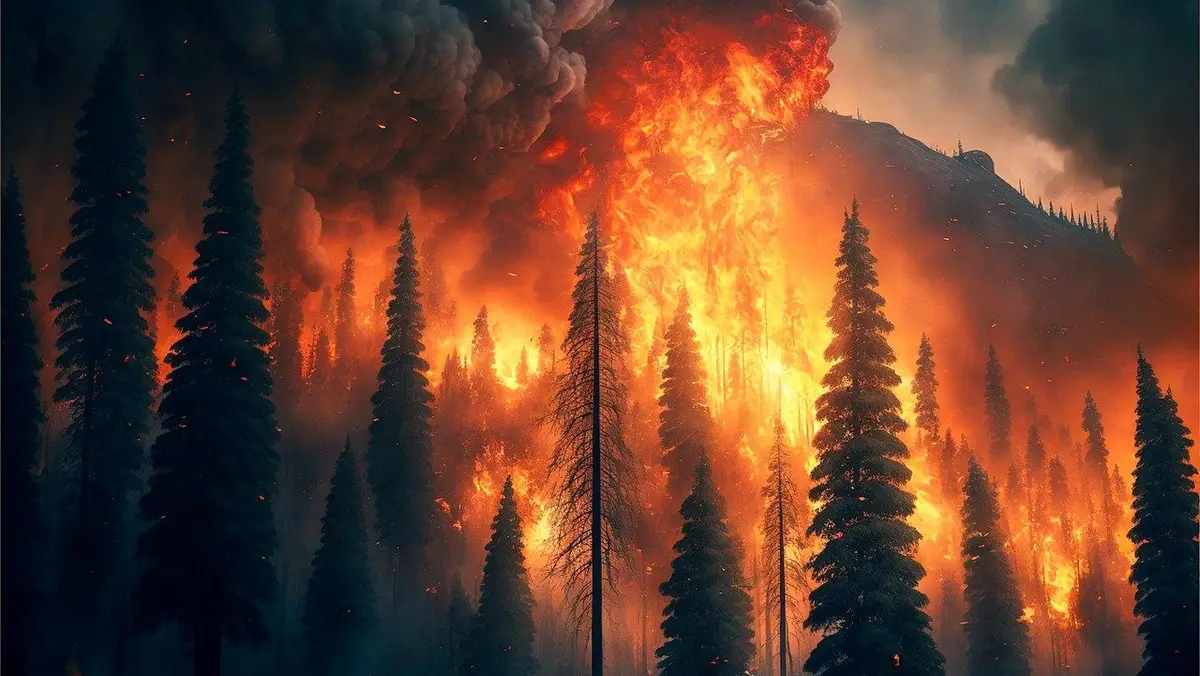
According to The New York Times, the global increase in the frequency and intensity of fires is almost exclusively due to changes in the temperate coniferous forests of the western United States and Canada, as well as in the boreal forests of North America and Russia. In these areas, the frequency of extreme fires has increased 11-fold and 7.3-fold respectively over the last twenty years. These observations "are consistent with the effects of climate change, which are creating warmer and drier conditions in these forests, conducive to extreme events", according to Cunningham.
The challenges faced by firefighters in tackling fires
The Washington Post highlights another worrying factor identified by the study: "As night-time temperatures rise, the intensity of the forest fires remains high throughout the night", thereby complicating the work of the fire brigade.
Jennifer R. Marlon, from Yale University, explained to the The New York Times the study notes that humans are altering the patterns of forest and grassland fires "far beyond anything we have ever done in the past".
Climate change: a reality of the present
Climate change is not some distant phenomenon, insists Calum Cunningham: "It’s happening right before our eyes. It’s a manifestation of the climate transformation we’re currently undertaking."
In response to this alarming situation, France has tightened its regulations on forest fire prevention through Act No. 2023-580 of 10 July 2023. This Act imposes legal obligations regarding brush clearance (OLD), thereby strengthening efforts to prevent and combat the intensification and spread of fire risk. The new measures include a strengthened duty to provide information to buyers and tenants of properties located in high-risk areas, and stricter penalties for failure to comply with brush-clearing obligations.
For further information, please see feuxdeforet.fr and the fire map.