













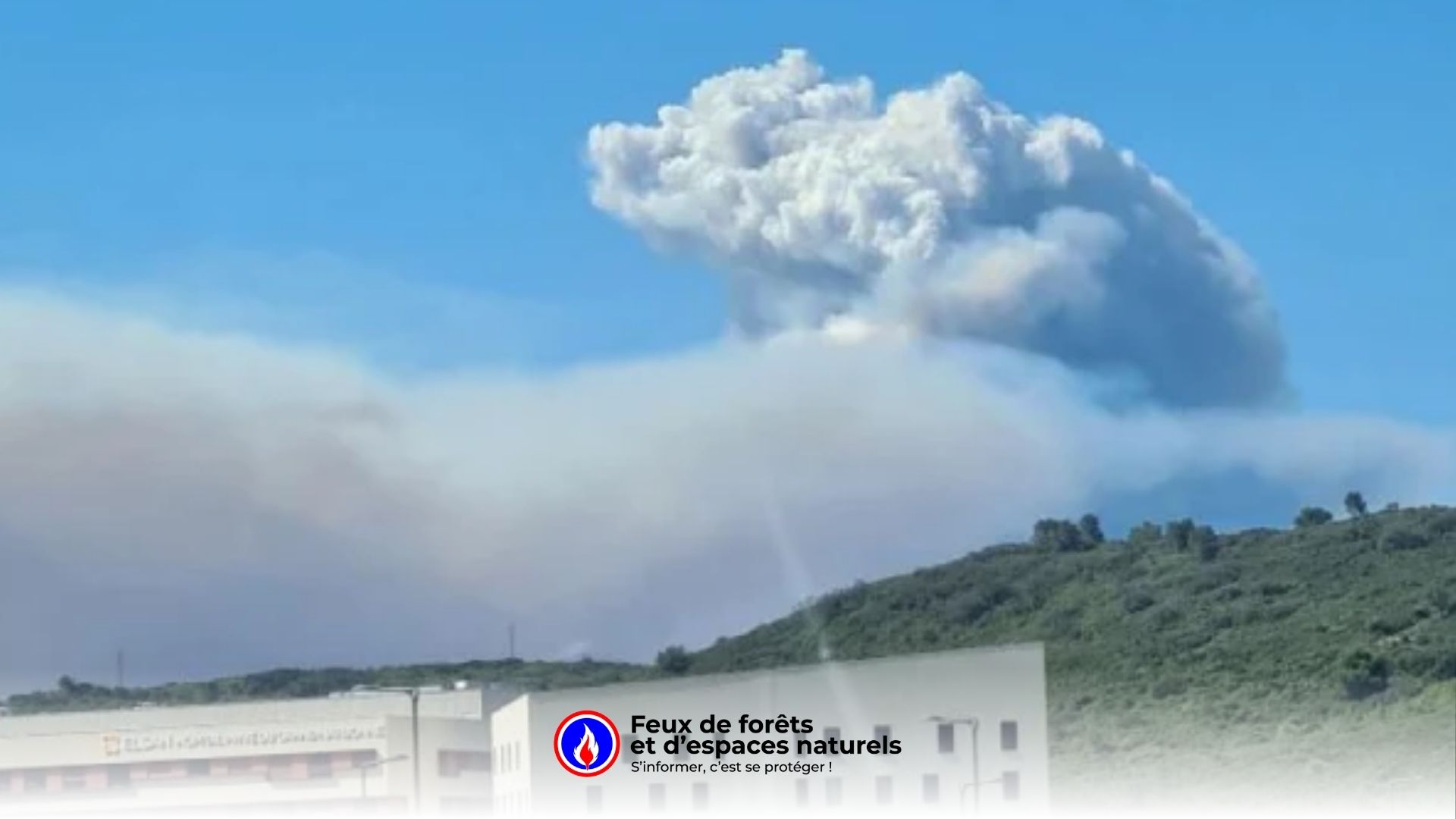

Setting off from the town of Ribaute On 5 August at 4.15 pm, the fire ravaging the south of the Aude is now the largest fire of the summer in France, with more than 16,000 hectares covered in barely 24 hours. Fanned by the heat, drought and strong winds, it struck 15 local authorities and mobilises exceptional resources.
> Follow the live coverage
In total, 2,500 firefighters who have come from all over France, 500 vehicles on the ground, 9 Canadair, 5 Dash and many water-bombing helicopters are hard at work. Today alone, 130 airdrops have been carried out. However, the light remains unsecured, with flames reaching up to 15 metres high.
A sudden change in the wind direction, which is now blowing from the west, caused to contain the fire within its point of origin, making the situation even more unpredictable. The A9 motorway, which had been closed for a time, was able to reopen, but Many district roads remain closed.
A heavy toll in terms of human lives and material damage; a nationwide mobilisation
The municipality of Saint-Laurent-de-la-Cabrerisse, the area hardest hit, was struck by a tragedy: A 65-year-old woman has died at her home, refusing to evacuate despite orders from the emergency services. Two more civilians have been admitted to hospital, including a person with severe burns, and 11 firefighters were injured, including one as a matter of absolute urgency. Three people are still missing.
The equipment inventory is also very heavy: several dozen homes have been destroyed or damaged, around forty vehicles calcined, and 2,500 households without electricity.
In the face of this disaster, 17 emergency accommodation centres have been opened and a medical and psychological support unit has been activated in Narbonne. The Departmental Operations Centre has been active since the start of the event.
“A disaster on an unprecedented scale”, according to the Prime Minister
Present at the scene alongside the Minister for the Interior, Bruno Retailleau, Prime Minister François Bayrou denounced a “ an event linked to global warming and drought ", describing the fire as " a disaster on an unprecedented scale ».
The government is now considering a plan for safeguarding the future for the region, and the European Union has said it is prepared to mobilise support.
Precautions and guidelines to follow
The authorities are calling for Do not attempt to return to the evacuated homes, at remain indoors unless instructed to evacuate, at do not block the roads, and to obtain information solely through official channels.
The persistent drought and the adverse weather conditions make the coming night even more uncertain. The situation remains out of control, and solidarity is taking shape in all the affected villages.