










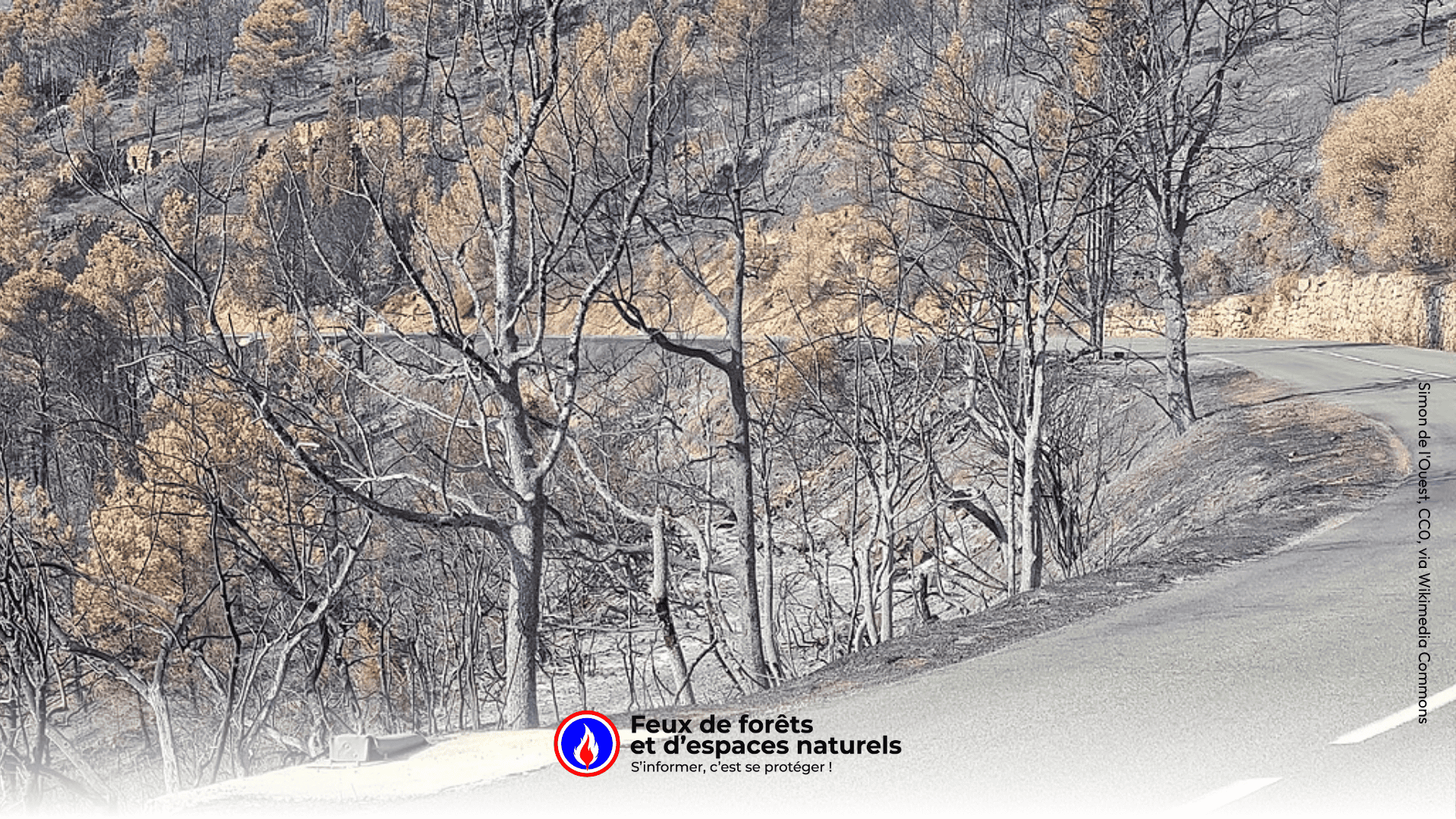
Almost a year after the massive fire that devastated the Aude region, investigations are continuing to determine the exact cause of the blaze. Investigators are now focusing on possible human negligence at the time the fire broke out, which is believed to have started between Ribaute and Lagrasse, on the D212 county road.
A hypothesis yet to be confirmed
According to the newspaper Midi Libre, the aim of the hearings is, in particular, to establish whether a cigarette butt could have caused the fire. At this stage, no one has been found liable and those involved are presumed innocent.
The ONF has informed AFP that the staff members were being questioned in a personal capacity and that the organisation was not implicated in the ongoing legal proceedings.
The point of origin of the fire had been identified in the early stages of the investigation thanks to the work of the specialists responsible for analysing the causes of the fire. This identification had led the authorities to quickly conclude that the fire was caused by human action, whether deliberate or accidental.
A fire that left a deep mark on the Corbières region
The Ribaute fire is regarded as one of the most severe forest fires in France in recent years. In total, nearly 17,000 hectares were destroyed in the Corbières, with significant consequences for natural areas, agriculture and local residents.
From the very outset, investigators had focused on the possibility that the incident was caused by human action. The forensic analyses carried out over the past several months should now make it possible to confirm or rule out the hypotheses currently under consideration.
For local residents and elected representatives, this latest development brings back memories of a fire that left a lasting mark on the area and whose consequences are still visible today.
The long-term work of fire safety experts
The very next day after the incident, a team specialising in investigating the causes and circumstances of fires was deployed to the scene. These experts are tasked with analysing the evidence found at the point of origin in order to piece together the most likely sequence of events.
Their investigations are based on the careful observation of traces left by the fire, the study of weather conditions, the analysis of objects found at the scene, and various technical and scientific examinations. This work regularly enables them to rule out certain hypotheses and confirm others.