













The Prefect of Gironde announced this morning on Here in Gironde that the fire which broke out on 22 July in the department was now under control. This massive blaze has consumed nearly 42,000 hectares. But what exactly do the terms used by the emergency services to describe the progress of a fire mean?
When a forest fire breaks out, the fire service and the authorities use specific terms to describe its status. These terms reflect the different stages of the operation and help to keep the public informed about how the operation is progressing.
Fire contained: the spread has been halted
A fire is defined as set when its advance along its main axis has been halted. In practical terms, this means that the fire service has succeeded in containing the advance of the flames at the fire’s leading edge, often through the use of backfires, water drops from Canadair aircraft or brush-clearing operations. However, secondary hotspots may still persist on the flanks or behind the main fire front.
At this stage, the emergency services are continuing to monitor the edges of the fire to prevent it from reigniting, particularly as a result of wind or heat. Their priority is to prevent the fire from spreading any further, whilst preparing for operations to bring it fully under control.
Fire brought under control: the flames are under control
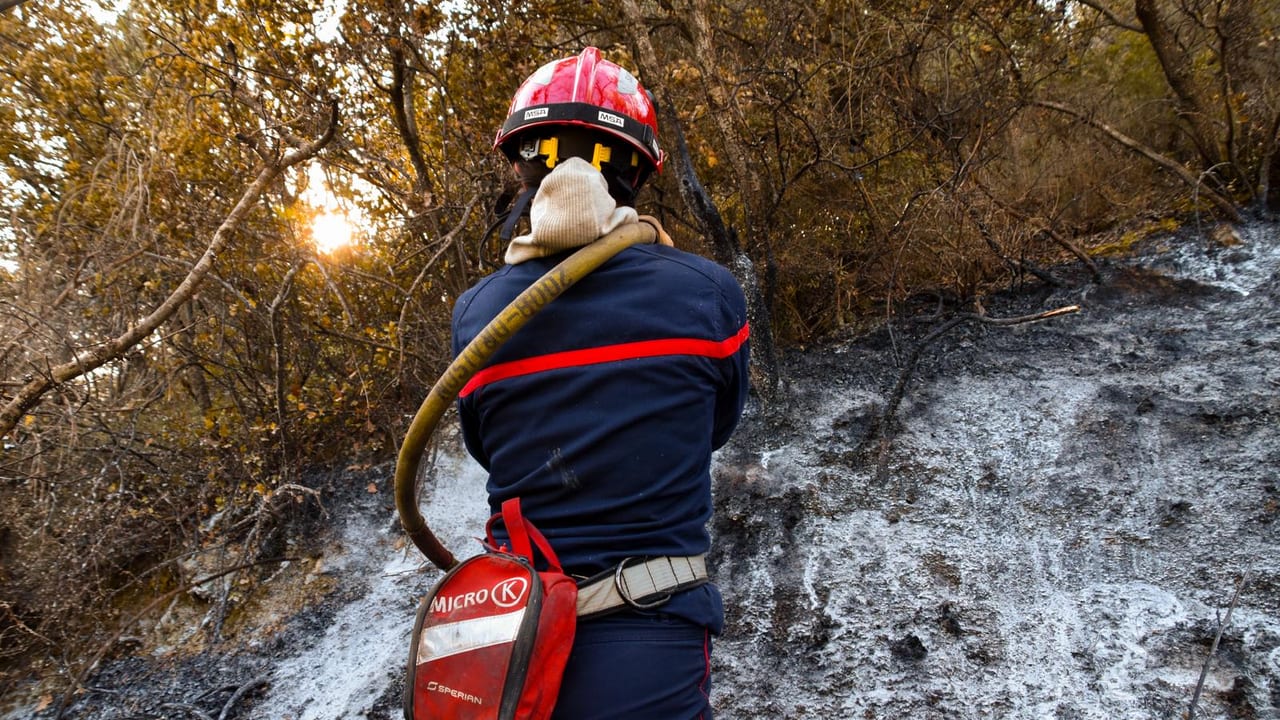
A fire has broken out under control once the largest flames have been extinguished and the fire’s edges have been fully contained by a continuous perimeter. Firefighters then deploy personnel and equipment to extinguish any remaining flames, often by spraying water onto the areas still active and turning over the embers using tools such as mechanical shovels.
This phase is crucial, as it helps to prevent the fire from reigniting, which is common in the hours or days following its apparent extinguishment. Teams remain on standby to monitor sensitive areas, such as peatlands or patches of dense vegetation, where embers can smoulder for several days.
Fire out: the firefighters can go home
Finally, a fire is considered to be off when there are no longer any flames or embers and the risk of the fire reigniting has been ruled out. The firefighters then stand down and return to their stations, after checking that all sources of heat have been neutralised. This stage marks the official end of the operation, although patrols may still be organised to ensure the situation remains stable.
Travelled or burnt: an important distinction
In the event of a fire, surfaces travelled and burnt are not always the same. Flames can spread over vast areas without consuming all the vegetation, particularly by ‘skipping’ under the influence of the wind. For example, embers can be carried by the wind and set alight distant areas, creating isolated fires.
This is why initial assessments often refer to the areas affected, whilst the final figures for hectares burnt may be lower. This difference is due to the ability of fires to bypass certain areas, leaving pockets of intact vegetation amidst the devastated areas.
In Gironde, the massive fire in Saumos – which is now under control – illustrates the scale of the resources deployed by the fire service to halt the spread of the flames. Monitoring operations are continuing to prevent the fire from reigniting, against a backdrop of weather conditions that remain conducive to the outbreak of fires.