













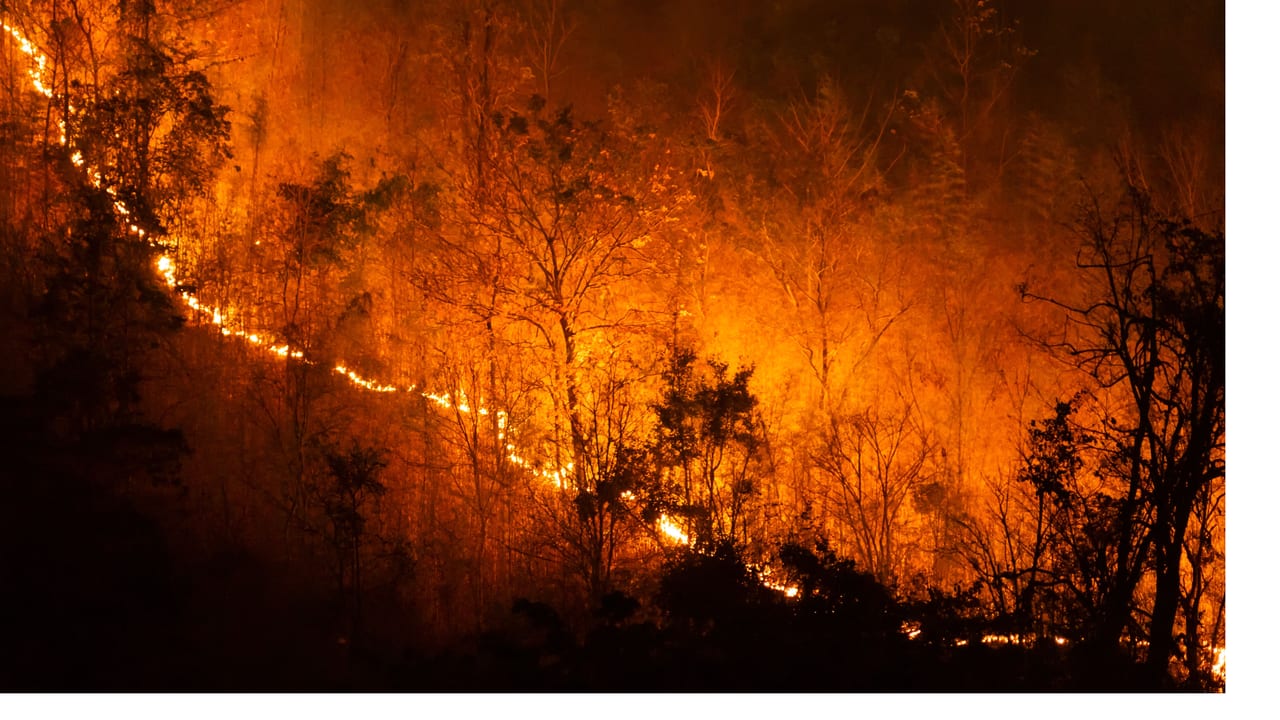

The Gros Bessillon fire, considered the longest in the history of the Var, was officially declared extinguished on Tuesday by the Var prefecture. It was first reported on 21 July in a field in Pontevès, in the heart of the Green Provence, the fire spread across 6,300 hectares and burnt 5,700 hectares of vegetation in seven municipalities: Pontevès, Correns, Cotignac, Carcès, Montfort-sur-Argens, Châteauvert and Barjols.
A month of gruelling work for the fire brigade
To bring this fire – unprecedented in its duration – under control, nearly 11,000 French and European firefighters were mobilised, supported by significant aerial resources. Several flare-ups, some of which may have been caused by arson, hampered their efforts before the fire was finally brought under control on 7 August. The teams had to contend with extreme conditions, including changeable winds and high temperatures, which made their task particularly difficult.
Extensive damage and mass evacuations
The fire caused significant damage to property: dozens of houses were damaged, and many vineyards were destroyed, particularly in Correns, where nearly half of the village’s vineyard area was burnt down. A total of 6,000 people were evacuated for their own safety. Local authorities and the emergency services worked closely together to organise these evacuations and protect the local population.
Aid promised for affected local authorities
During a visit to the Var on Monday, President Emmanuel Macron announced that the local authorities affected by this fire would receive the same support schemes than those put in place in Gironde. This measure aims to support the reconstruction effort and assist residents and farmers affected by the fires. The prefecture also emphasised the importance of remaining particularly vigilant in the coming days, despite the fire having been officially declared extinguished, due to the risk of it reigniting as a result of weather conditions.
Meanwhile, another fire, the one in Ginasservis, was also brought under control in the department, marking the end of a particularly trying period for the emergency services and the residents of the Var.