














The main points of the bill
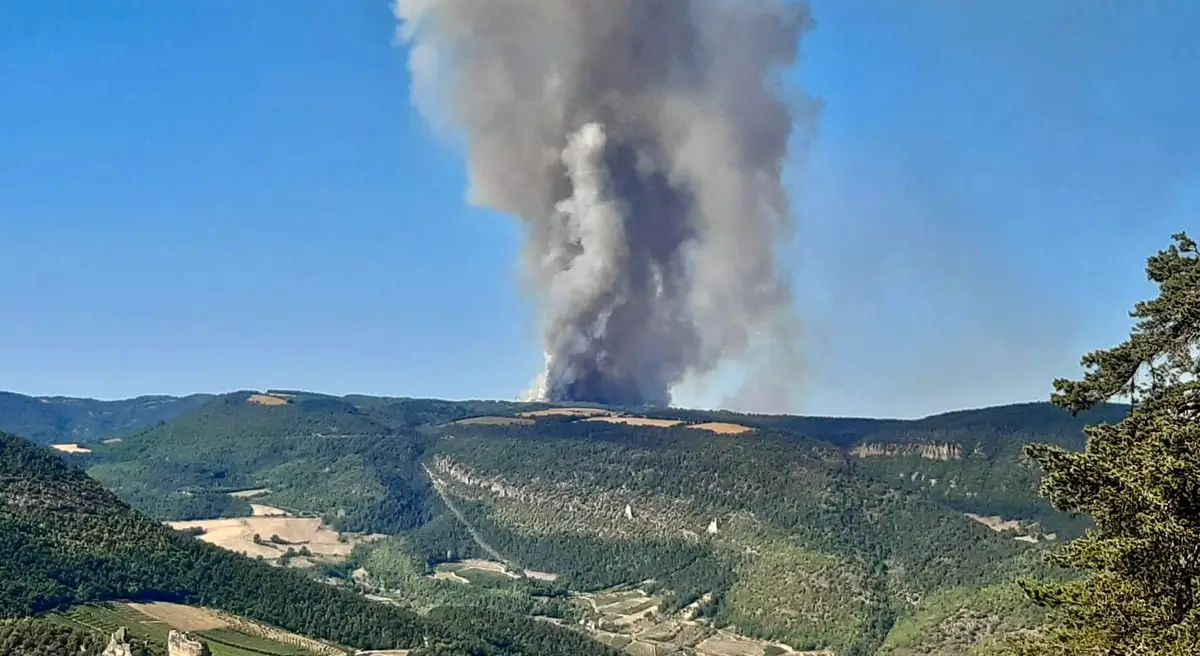
Global warming is increasing the risk of ‘mega-fires’ year on year. By 2050, the area affected by wildfires could increase by 80 per cent in the Mediterranean region alone. A Senate report submitted in the summer of 2022 has recommended several measures to better prevent and combat these fires. The draft bill, tabled by the same authors as this report, incorporates several of these recommendations.
As adopted and expanded upon by parliamentarians and the government, it deals with eight themes in dedicated sections :
- To draw up, by 2024, a national forest conservation strategy and non-forested areas against wildfires. This strategy will fall under the remit of the ministries responsible for forests, the environment and civil protection, in consultation with various stakeholders such as the National Forestry Office (ONF) and elected representatives from forest-based local authorities. It will need to carry out an assessment of the human, financial and technological resources available and capable of being mobilised across the whole of the country to prevent and combat the intensification and spread of the risk of wildfires. This assessment will be broken down by region.
- Better regulation of the interfaces between forests, urban areas and infrastructure
A simplified procedure has been introduced to define, at local authority level, hazard zones in which specific rules governing land use and development will apply, modelled on those implemented in the natural risk prevention plans for forest fires (PPRif). - Revitalising forest management and to promote forestry in the face of the risk of fire
A national network of experts in forest fire prevention is being established within the National Centre for Forest Ownership. - Improving the management of forest stands
- Mobilising the farming community to recognise their key role in preventing forest fires
In particular, prefects will be required to draw up a list of those who can be called upon to assist in fire-fighting efforts, which will include available and willing farmers in each municipality, as well as their water tanks. Farmers may be called upon to assist with the water supply. - Raising public awareness
- Equipping the fire brigade meeting needs
- Reforesting burnt plots and to fund the restoration of more resilient forests.
Among the key measures in the bill are several articles that strengthen the statutory obligations regarding brush clearance (OLD), which are a key preventive measure. The conditions for implementing the OLDs at campsites have been clarified. The criminal penalties for non-compliance with these obligations have been increased, rising from 30 to 50 euros per square metre uncleared. MPs have further extended the OLDs. In particular, an amendment creates a requirement to clear undergrowth around Seveso sites situated within 200 metres of woods and forests, to a depth of 100 metres. Members of Parliament have scrapped the tax credit for brush-clearing work, which had been introduced by the senators.
Another clause in the draft bill enshrines in law a ban on smoking within a radius of 200 metres of all woodland and forests during the fire risk period defined by prefectural order. This ban has been extended by Members of Parliament. Initially, the Senate had only envisaged it for woods and forests classified as being at risk. A amendment Senatorial explicitly included the act of throwing away a cigarette butt among the causes that may “unintentionally cause fires in woodlands and forests”. As is already the case in other circumstances (fires lit or left unattended without sufficient precautions…), the person in charge may incur, in the most serious cases resulting in the death of one or more people, ten years’ imprisonment and a fine of 150,000 euros.
By a government amendment, National Resilience Day (JNR), which was held for the first time on 13 October 2022, is continued in order to “ensure that the public is prepared to deal with natural or technological risks”. National Reading Day will be held every year on 13 October. Furthermore, to make it more effective, another government amendment has explicitly included major risks in staff awareness-raising initiatives, for both public and private sector employers and for heads of establishments.
To improve firefighting efforts, private employers who facilitate the availability of their employees who are volunteer firefighters for operational duties will benefit from a reduction in employers’ social security contributions (up to €1,500 per employee and €7,500 per employer). The reduction will apply for a period of two years and will be subject to a final assessment to evaluate its benefits and costs. Members of Parliament, for their part, have introduced a legal entitlement to five or eight days’ leave per year for volunteer firefighters in the event of a crisis, similar to the one already in place in the operational reserve. This measure will apply to both private and public sector employers. Student volunteer firefighters will also benefit from adjustments to the organisation and delivery of their studies, as well as specific rights.
Against the government’s advice, MPs voted in favour of a full exemption from fuel duty for vehicles belonging to departmental fire and rescue services (SDIS), as provided for in the original text. The senators had voted in favour of a partial exemption.
Furthermore, a amendment the Senate has provided a legal basis in the Forestry Code for the practice of tactical tree pruning, which were carried out as an emergency measure in the summer of 2022 to contain the widespread fires that ravaged the Gironde and the Landes.
Members of Parliament and senators must now meet in a joint committee to reach agreement on a final version of the bill.