













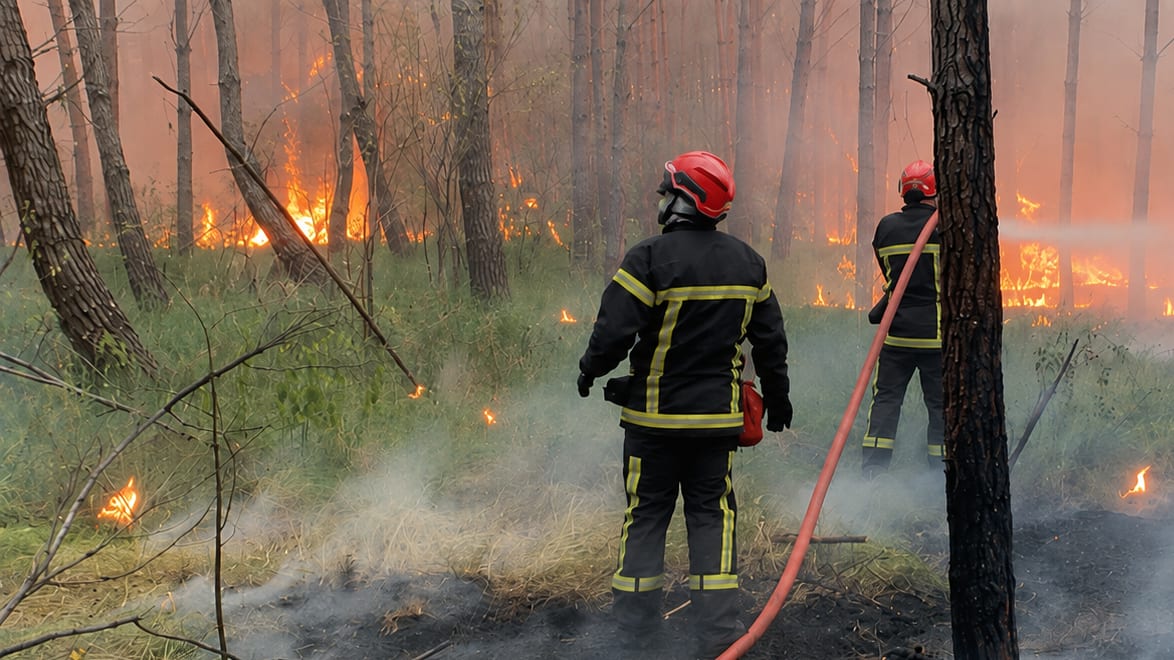

When a fire breaks out in a forest or in natural areas, the fire service employs specific tactics to halt its spread. These methods, governed by the operational doctrine of the Directorate for Crisis Management and Civil Protection (DCGCSC), are structured around three key phases: containing, controlling and extinguishing the fire.
The three stages of the attack phase
The first step, stare at the fire, aims to stop it from spreading. This can be achieved using natural features such as firebreaks or fire-resistant zones, or through direct intervention by the emergency services. Once the fire has been contained, the fire brigade moves on to the phase of master's degree : they reinforce the flanks of the fire whilst extinguishing secondary outbreaks. Finally, theextinction involves carefully treating hot spots, often using water mixed with a wetting agent or tools such as rakes, to prevent the fire from reigniting in the wind.
Offensive manoeuvres: charging into the flames
Offensive tactics enable firefighters to ‘ to fetch fire "to stop it. Three main methods are used:
- The flank attack : Resources are deployed along the most vulnerable flank to advance up to the fire front and halt its spread. This is the most common tactic.
- The flank attack : a gap is cut through a flank to advance into the burnt area and break the fire’s head from the inside, an effective technique in the event of a fierce fire front or difficult access.
- The head-on attack : This method is to be used only in situations where the wind is moderate; it involves extinguishing the head of the fire directly before tackling the flanks.
Defensive manoeuvres: protecting sensitive areas
When conditions do not allow for a direct attack, firefighters opt for defensive strategies. These aim to wait for the traffic lights and to protect key assets, such as homes, critical infrastructure and industrial areas. Two approaches are prioritised:
- Protecting sensitive areas : The Head of Rescue Operations (COS) identifies strategic sites that need to be protected. Although resources cannot cover every house, clearing undergrowth remains a vital preventive measure.
- Establishing lines of support : these lines, whether static or dynamic, are set up in advance to tackle fires in designated areas. In a static formation, the vehicles are spaced out across an area designed to halt the spread of the flames. In a dynamic formation, they advance in column, using their hoses whilst on the move.
Specific tactics: tactical burning and preventive cutting
Among the advanced techniques, the tactical flares have been regulated by the Forestry Code since 2004. They involve lighting a secondary fire to deprive the main fire of fuel. There are two methods:
- The backfire : a controlled burn is set up opposite the fire to create a vegetation-free zone and halt its spread.
- Tactical burning : When planned in advance, it helps to contain a fire by limiting its spread.
Another approach is the tactical substitutions, such as those carried out in Gironde in 2026, are designed to create fuel-free corridors to slow the spread of flames. Plots measuring 15 kilometres have therefore been cleared of trees and mulched, leaving 800-metre-wide strips to block the fire’s advance. Since 2023, this practice has been enshrined in the Forestry Code.
Other tools to help in the fight
Firefighters also have other tactics at their disposal, such as the forstage, which uses heavy machinery (bulldozers, shredders) or hand-held tools (chainsaws, brush cutters) to create access routes or fuel breaks. The use of terrestrial retarder complements these measures by slowing the spread of the flames.
These strategies, combined with the expertise of the fire service, enable forest fires to be tackled effectively, by adapting resources to the conditions on the ground and the way the fire is developing.